


In Kenya, violence against women is far more than a statistic. The scale of the problem has led to widespread calls for it to be formally declared a national crisis, a position echoed by the President’s Technical Working Group on Femicide, which recommended that gender-based violence, including femicide, be declared a national crisis.
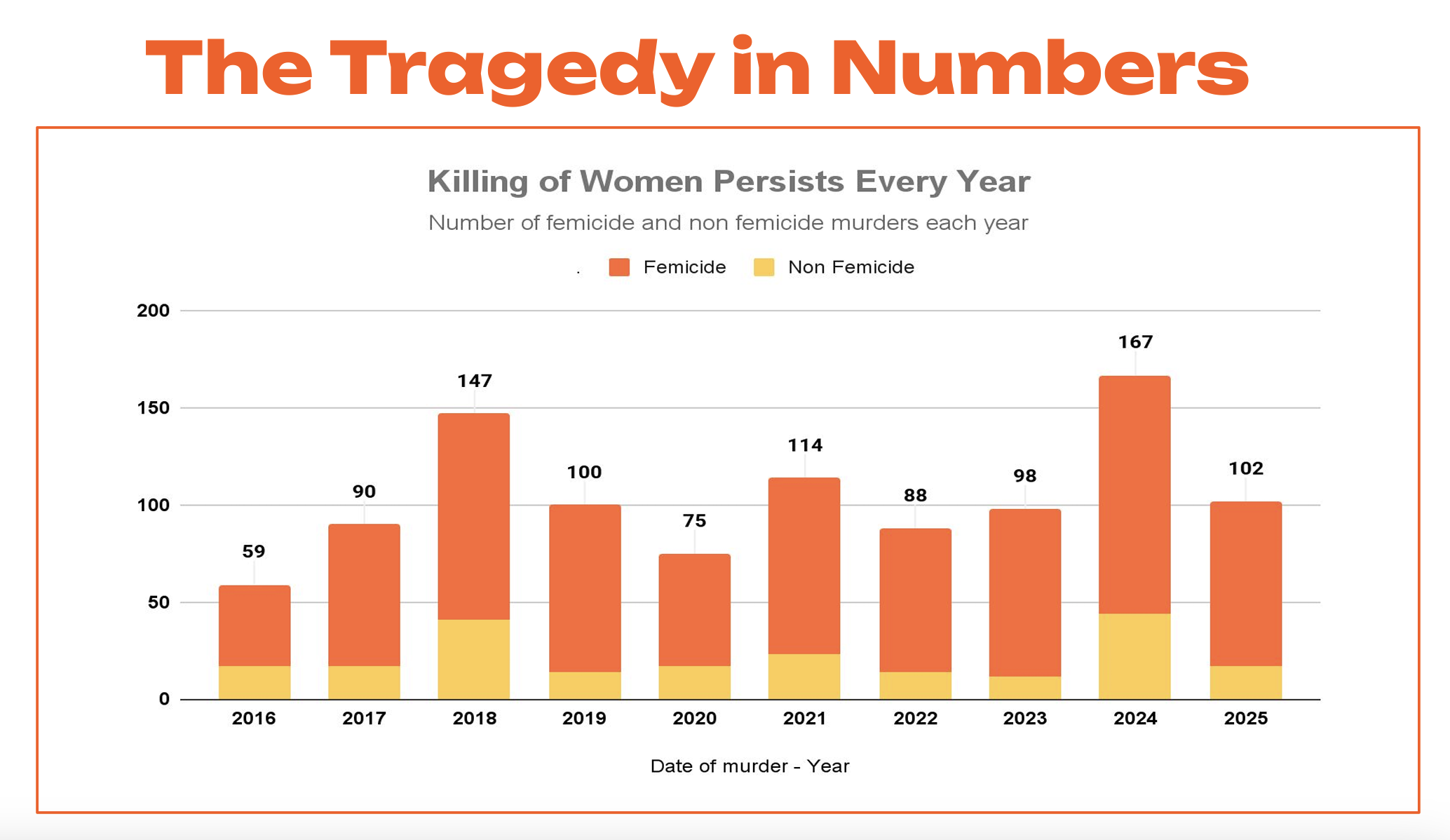
Our database has recorded how 1,069 women were killed between 2016 and 2025. Despite growing awareness, media attention, and legal intervention, the data does not show resolution; it shows continuity. In 2025 alone, media reports and court records documented the killing of 102 women, bringing the total in our database to 1,069 – 78 percent of whom were killed in acts classified as femicide.
The database, updated annually, is the result of three years of collaboration by Odipo Dev, Africa Uncensored, and Africa Data Hub to build the most comprehensive public record of femicide in Kenya. Beyond counting deaths, it seeks to make visible the patterns, silences, and systemic failures that allow this violence to persist.
The Theft of Dreams: Who is Getting Killed
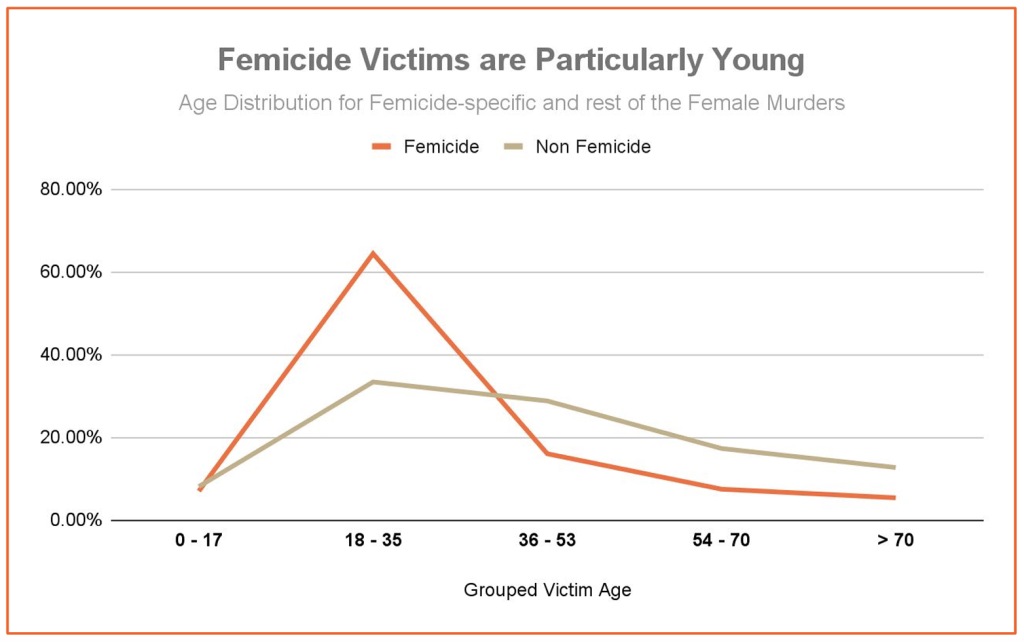
In 2025, the age profile of femicide victims sharpened further around young adulthood. Women aged 18–35 accounted for nearly two-thirds of all femicide cases, rising to just under 65 percent, the highest share recorded since 2021.
The most common age of victims continues to cluster in the mid-twenties. Victims aged 36–53 declined compared to earlier years, while cases involving children and older women remained consistently lower. This pattern differs sharply from non–gender-related murders, where deaths are more evenly distributed across age groups. The data underscores that femicide is not randomly spread across the life course: it is a form of violence that targets young women, with age itself acting as a key risk factor.
The Anatomy of Violence: How They Got Killed
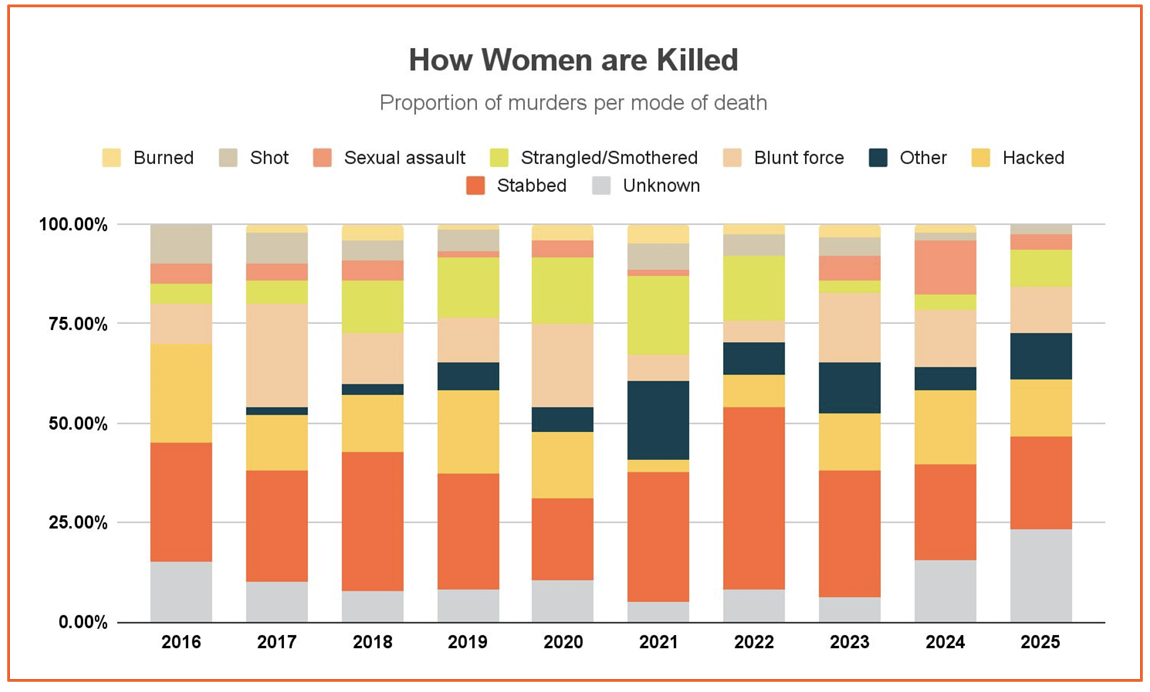
The majority of women are killed through direct physical force, most notably by stabbing. This method requires a level of closeness that points to intimate, face-to-face violence.
Equally disturbing is the persistent prevalence of strangulation and blunt force trauma. These methods often signal a prolonged escalation of harm, where there was time to intervene but the violence was allowed to continue. Strangulation, in particular, is a well-documented “red flag” in patterns of domestic abuse that often precedes a fatal outcome.
Who is Killing Women
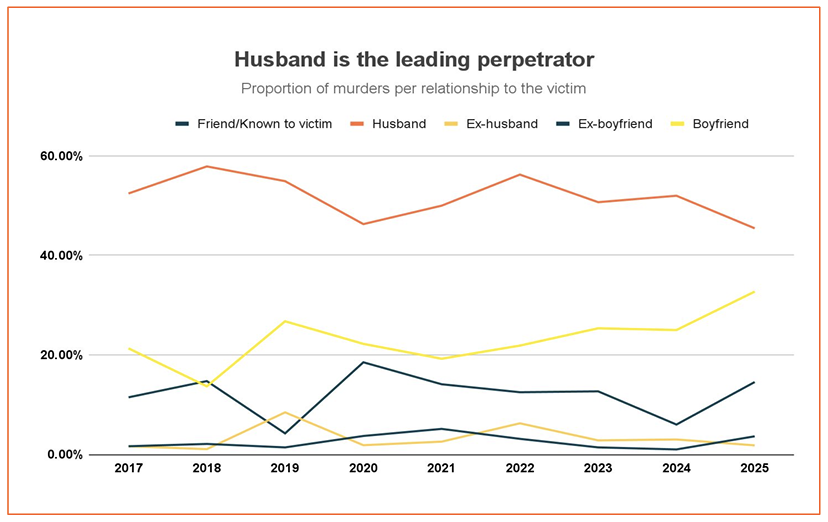
Across the years, one line remains consistently high: Intimate Partners. From 2017 to 2025, they account for the largest proportion of murders, hovering between nearly half and well over half of all cases. The data shows that marriage, for many, does not shield women from harm; instead, it too often places them directly in its path.
We are also seeing a sharp and troubling escalation in violence within dating circles. Killings by boyfriends have risen steadily, peaking at 32% in 2025.
The presence of ex-partners and family members in these records further underscores that violence doesn’t always end when a relationship does. For many women, leaving is not a clean break but a continuation of the threat.
The Faces of Responsibility: Unmasking The Perpetrators
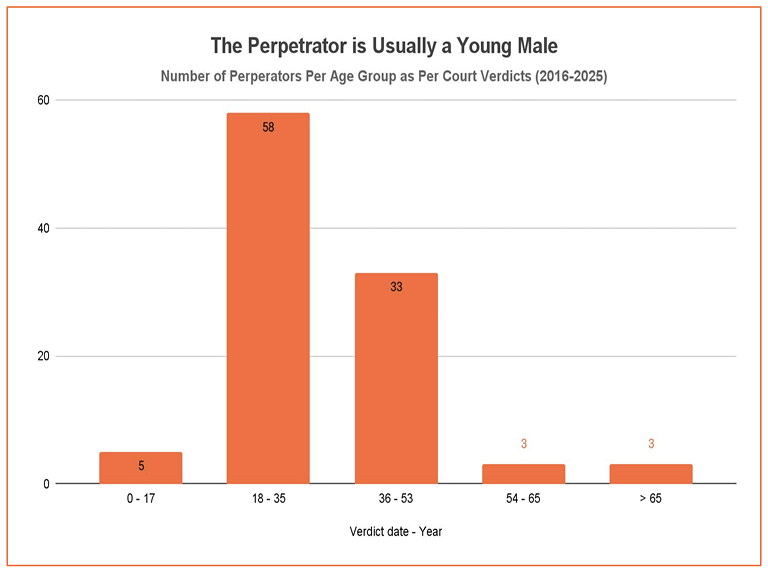
When we shift the focus to those committing these acts, the data reveals a sobering reality about power and proximity. The most prominent demographic falls within the 18–35 age group, a stage of life typically defined by building futures and nurturing new relationships. Instead, this generation accounts for the highest share of violence.
Ages 36–53 reinforces that femicide is not limited to youth or impulsive behavior alone. These are men with longer life experience, often deeply embedded in family and community structures. Their presence in the data suggests that violence is sustained over time, normalized, and carried into later stages of life rather than outgrown.
At the edges of the chart sit smaller bars: children and adolescents (0–17) and older adults (54 and above). Though fewer in number, these cases are deeply troubling. They remind us that violence can begin early and persist late into life.
Unmasking the Perpetrators: Insights from Perpetrators Convicted in 2025
In 2025, Kenyan courts handed down convictions in 78 cases. Behind each verdict is a perpetrator whose actions were once hidden behind intimacy, trust, or proximity. The cases below unmask four of those individuals, showing how violence unfolds in private spaces and how courts bring accountability.
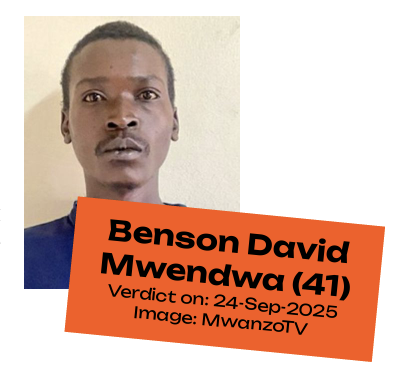
Benson David Mwendwa was sentenced to 30 years’ imprisonment for the killing of Jane Mwende Kilonzi in Gwakarigu village, Mbeere Sub-county, Embu County. The court heard that Mwendwa fatally assaulted Kilonzi with a wooden plank during a dispute after she allegedly rejected his advances. In imposing the sentence, the judge noted the brutality of the attack and the devastating impact of her death on her eight children, describing the punishment as necessary to reflect the gravity of the crime and deter gender-based violence.

Adan Hassan was sentenced to 20 years’ imprisonment for killing his wife, Habib Hassan Barre, at their home in Voi, Taita-Taveta County. The records show that Hassan violently attacked Barre during a domestic dispute in the early morning hours, tying her to a chair, beating her with a wooden timber, stomping on her abdomen, and ultimately strangling her to death with a piece of clothing while their first-born child watched. Hassan later tried to conceal the crime and told neighbours she had collapsed, but forensic evidence and statements from the child led to his arrest. The court accepted his guilty plea to manslaughter and imposed a long custodial sentence, deducting time already served, as part of efforts to hold perpetrators of intimate partner violence accountable.

Evans Juma Wanjala was sentenced to life imprisonment for the murder and sexual assault of a young girl in Soweto Estate, Moi’s Bridge, Uasin Gishu County. Police found the victim’s body near a railway line after she went missing on the night of December 31, 2019, and a post-mortem showed she had been strangled and sexually violated. Forensic DNA evidence matched Wanjala to the crime and linked him to a series of similar killings of young girls in the area. During investigation, Wanjala reportedly confessed and led officers to other crime scenes, strengthening the case against him. The court imposed a life sentence, marking a severe punishment for the heinous nature of the offence and the harm caused to the community.

Naneu Muthoni Muturi, 31, was found dead inside a house at Onyonka Estate in Lang’ata, Nairobi, after she met her boyfriend despite having previously promised to stay away from him. Police say the couple had spent time together and later got into a violent domestic altercation during the early hours, leaving Muthoni with multiple fatal head, shoulder, and back injuries before her boyfriend fled the scene and crossed into Uganda. Investigators tracked down the suspect, Thomas Mbugua Muthee, who later pleaded guilty to manslaughter after negotiations with the state. The court took into account the brutal nature of the attack and Muthoni’s injuries, and sentenced Muthee to 15 years in prison for causing her death.
Where Women are Killed
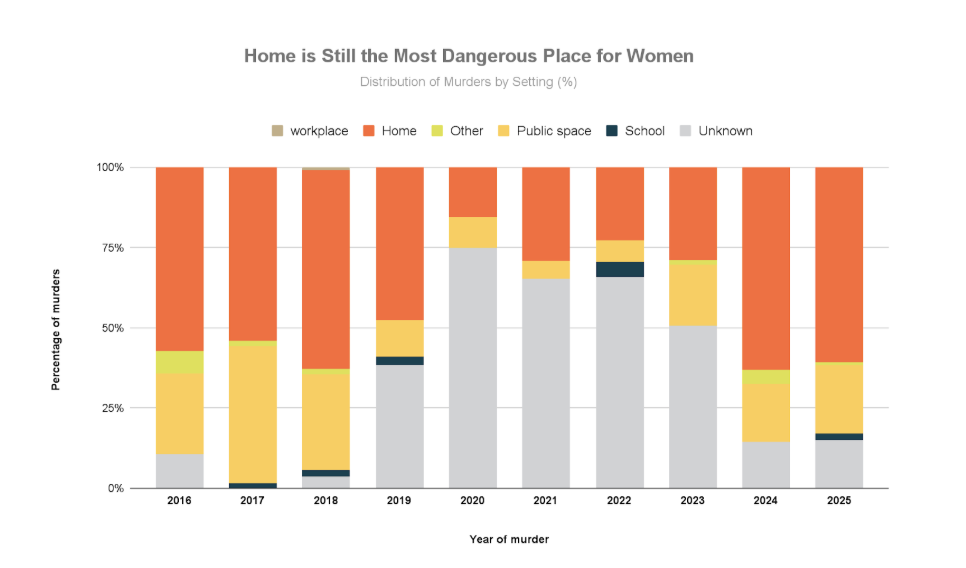
When cases with unknown locations are removed, the data shows two clear and troubling trends. The home remains the primary site of femicide, but violence in public spaces has also risen over time, signalling a broader erosion of safety for women beyond private settings.
By 2025, more than 70 percent of femicides with known locations still occurred in the home, confirming the persistence of domestic danger. At the same time, killings in public spaces increased to roughly a quarter of cases, up from much lower shares earlier in the decade. This rise points to a shrinking margin of safety for women in streets, neighbourhoods, and shared spaces.
How Judicial and Systemic Gaps Show Up
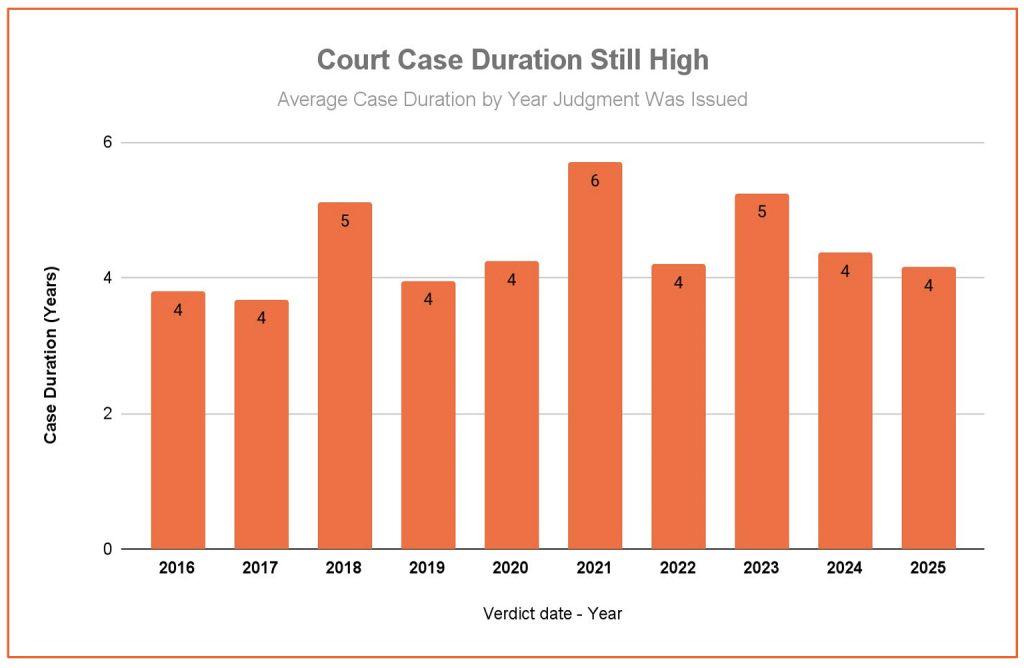
Our data found only about 6% of femicide cases reported in the media since 2016 have reached judgment. Even for those that do, justice is slow. By 2025, cases still take an average of four years to reach resolution. For families, this delay is not just measured in time, but in years of repeated court appearances, relived trauma, and prolonged uncertainty.
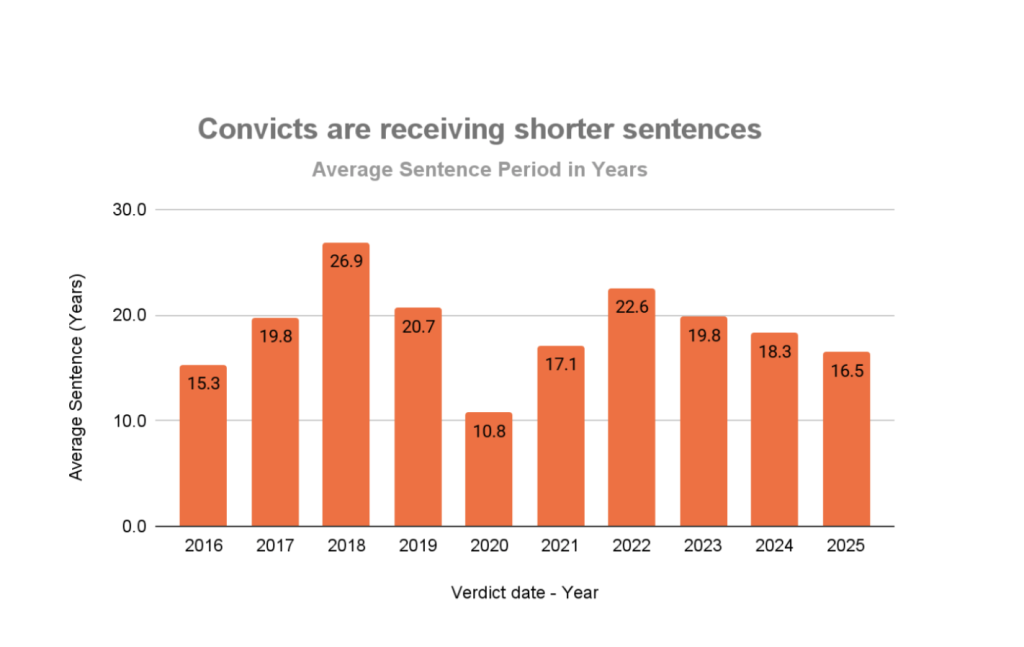
Sentences for Convicts are Getting Shorter
Sentencing data over the past decade shows a clear trend in how courts punish femicide-related convictions. The longest average sentences were handed down in 2018, when prison terms peaked at just under 27 years. Since then, sentencing lengths have fluctuated but have trended downward in recent years. From 2022 onward, the average sentence has declined by roughly two years annually, reaching an average of 16.5 years in 2025.
The Weight of the Verdict: High Convictions vs. the Long Road to Justice
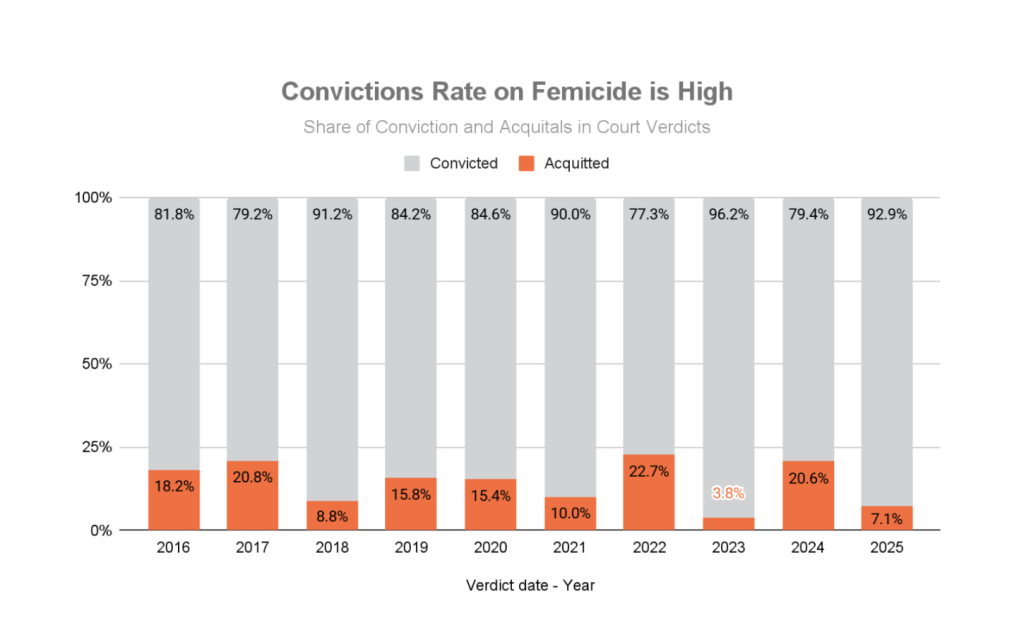
In 2025, 93% of at least 84 cases concluded during the year resulted in convictions. Despite slow and painful court processes, convictions in femicide cases remain high.
Acquittals appear smaller, but they deeply matter; it is a moment where a family leaves the courtroom without closure.
The data shows that when the justice system finally moves, it often does so decisively. Yet it also highlights a difficult truth: waiting for justice in a femicide case can take long and end up in an acquittal.
Why Husbands Receive Lighter Sentences
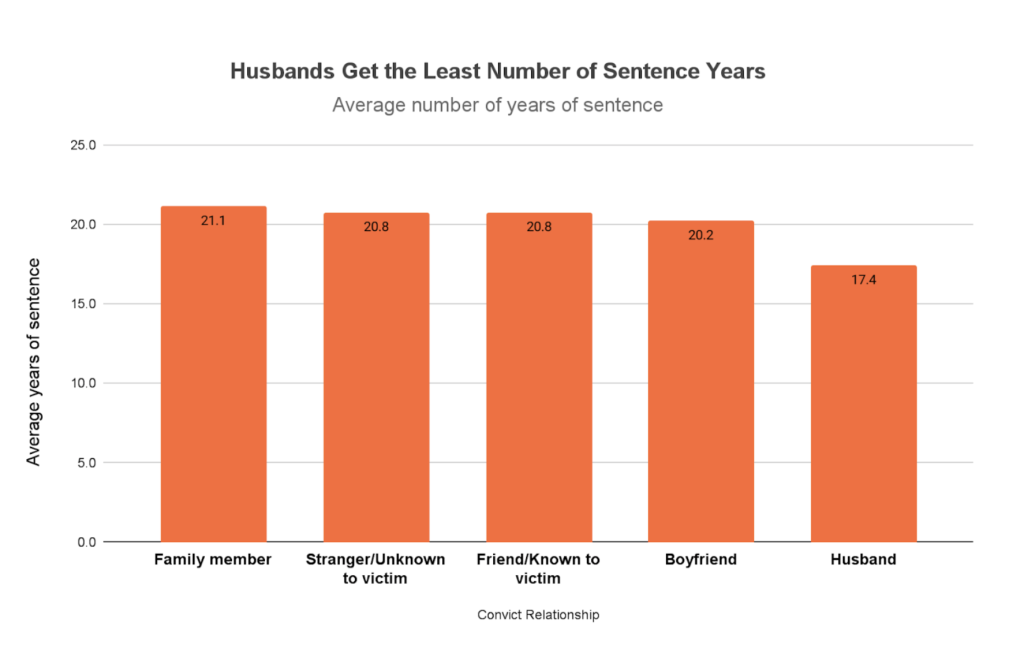
Husbands are more likely to be convicted of manslaughter, resulting in shorter sentences, an average of 17 years, compared to other family members, who receive an average of 21 years. Courts make these determinations based on plea bargains, often citing spur-of-the-moment fights and the need for the accused to care for children left behind.
Counties Where Justice Takes Long to Come by
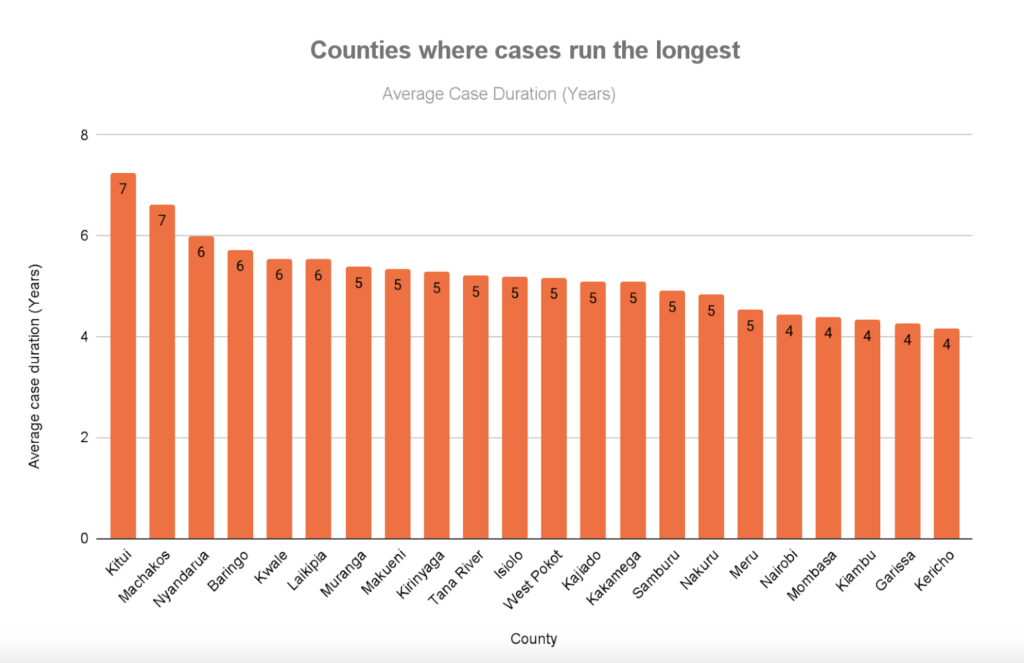
The time it takes for femicide cases to reach a verdict varies sharply by county, revealing deep geographic inequalities in access to justice. In Kitui and Machakos, families wait an average of seven years for a court decision. In Nyandarua, Baringo, Kwale, and Laikipia, cases take about six years to conclude. Even in counties with comparatively faster outcomes, including Nairobi, Mombasa, Kiambu, Garissa, and Kericho, families still wait an average of four years.
The data shows that femicide is shaped not only by violence, but by where that violence occurs. Location determines how long families wait for accountability and, in some cases, whether justice arrives at all.
Femicide Cases That Don’t Reach Public’s Eye
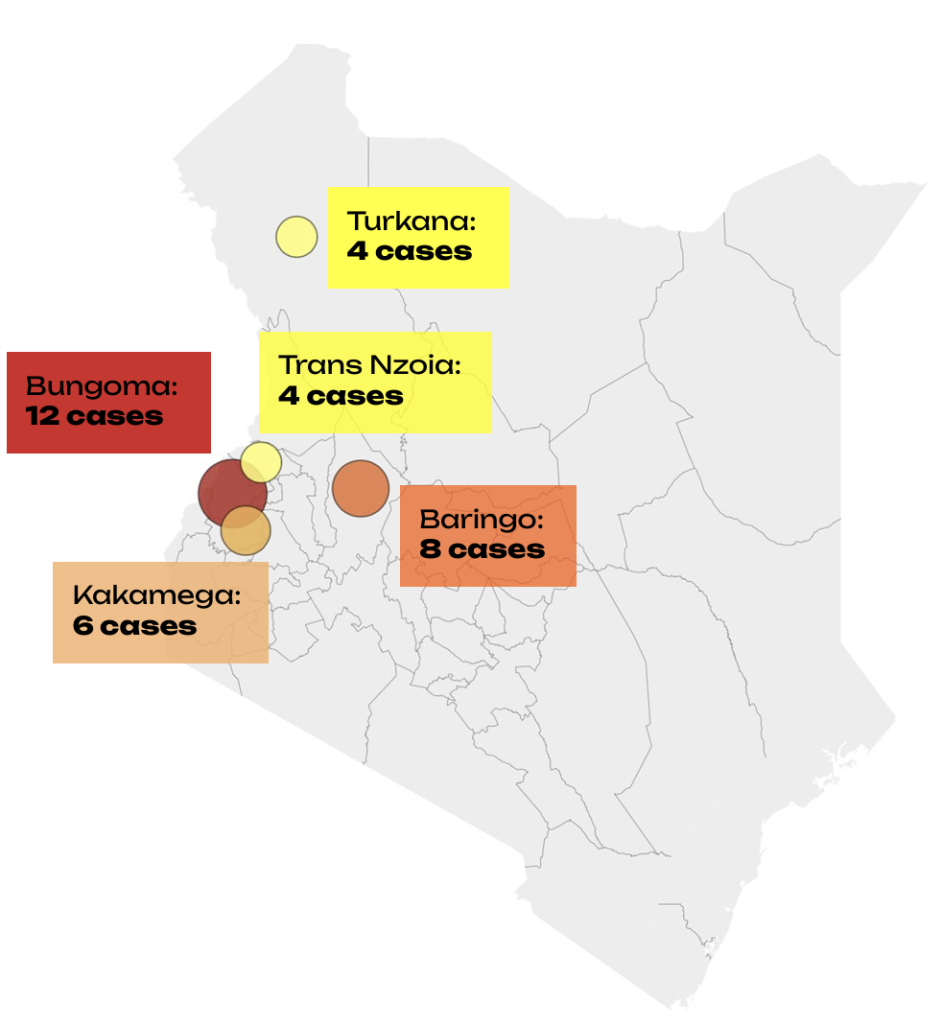
By comparing court records and media reports, we identified over 40 murder cases from 2020–2024 that never reached the news, giving a glimpse of just how much doesn’t get reported.
Counties most under-reported by the media:
- Bungoma: 12 cases
- Baringo: 8 cases
- Kakamega: 6 cases
- Trans Nzoia: 4 cases
- Turkana: 4 cases
These figures reflect only cases that have reached judgment. Given the long timelines for court processes, the findings suggest that many more cases, especially those still pending, receive little or no media attention.
The Cost of Pursuing Justice for Survivors and Families
For families seeking justice after a femicide, and for survivors of gender-based violence navigating legal and protection systems, the process comes with a wide range of financial burdens.
Medical and evidentiary costs are usually the first to arise. Survivors and families are required to cover medical examinations, treatment for injuries, and the documentation needed to formally register a case, including P3 medical forms and other medical reports required to move investigations forward.
Transport is another unavoidable expense. Survivors and families make multiple trips to hospitals, police stations, courts, and other offices, often over long distances and across extended periods. Beyond direct expenses, time lost to the justice process translates into lost income.
Some expenses occur only once or are specific to certain cases but can be particularly heavy, such as post-mortem examinations. Others are costs incurred to ensure safety and emotional recovery. These may include counseling, temporary relocation, or other protective measures.
The New Frontier: Tech Facilitated Gender Based Violence
How Digital Platforms Are Weaponized to Facilitate TFGBV in Kenya
In Kenya, we are seeing a troubling shift in how digital platforms are being used. What used to be spaces for connection are now being weaponized to recruit, groom, and exploit women and girls through technology-facilitated gender-based violence (TFGBV). A 2025 report by Equality Now, makes it clear that this abuse doesn’t just stay online. Instead, it exists on a dangerous “continuum” where a simple message or friend request often leads to physical sexual violence in the real world.

The stories shared by survivors show just how easily platforms like Facebook, TikTok, WhatsApp, and various dating apps can become entry points for predators. In one example, a 17-year-old student connected with a man on Facebook who spent time gaining her trust by sending money for school fees via mobile money transfers. In this case, the digital payment system wasn’t just a convenience, it was a grooming tool used to build a sense of dependency. Once that bond was established, the perpetrator lured her to an in-person meeting where she was drugged and raped.
Similarly, recruitment scams show just how easily digital networks can be turned into tools for human trafficking. Many survivors first connected with perpetrators through job ads on TikTok and WhatsApp, hoping for a better life abroad. These platforms allow brokers to hide their identities, organize travel, and stay in touch across borders, all while staying under the radar of the law. Once these women arrived overseas, the “opportunity” turned into a nightmare of sexual assault and threats sent through digital messages.
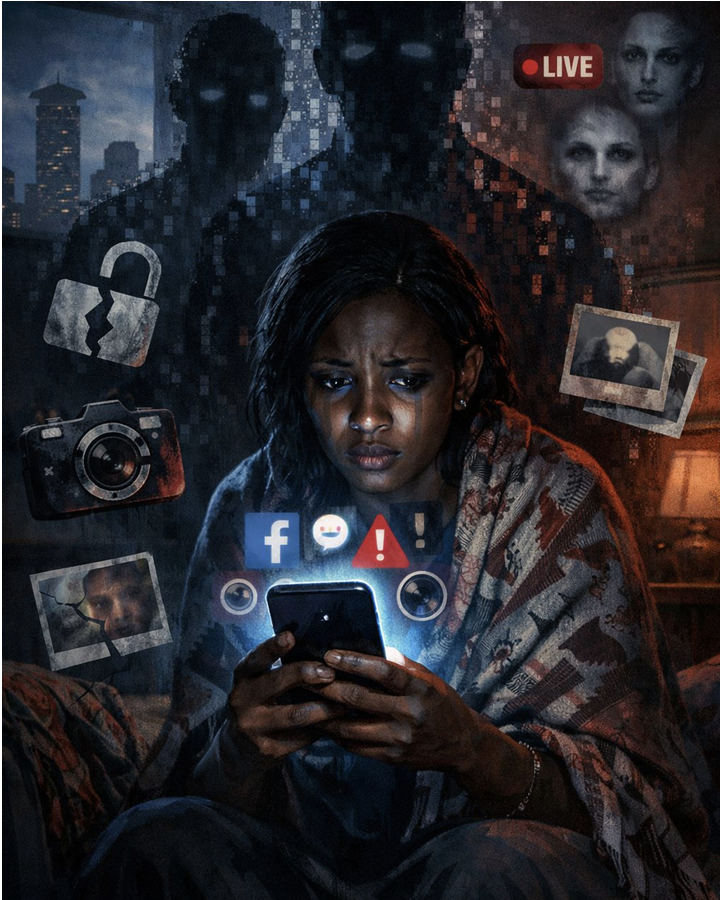
We also see this happening on dating apps and social media, where predators “simulate” romantic relationships just to trap women. Survivors describe a process where digital intimacy is carefully built up through constant messaging and promises of financial help or gifts. Once the victim feels safe and supported, the tone shifts abruptly into sexual coercion and abuse.
Online Platforms’ Accountability Failure
Online platforms are increasingly used to initiate contact that leads to offline violence, but they are also central to the creation and circulation of digital sexual abuse. In recent years, platforms such as Telegram and X have emerged as key sites for the sharing and distribution of deepfake pornography, often operating with limited moderation and weak enforcement against non-consensual content. These failures have allowed harmful material to spread rapidly, frequently beyond the reach of affected women.
At the same time, more mainstream platforms continue to function as gateways to physical harm. In April 2019, Ivy Wangeci, a medical student in Eldoret, was killed by a man she had interacted with on X and Facebook. In January 2024, Starlet Wahu was murdered in a Nairobi AirBnb after investigators said the suspect used Instagram and a dating app to identify and lure women. That same month, Rita Waeni, a 20-year-old university student, was killed in a Roysambu Airbnb after a contact that began on Instagram, was later used to issue ransom demands to her family.

Closing the Gaps that Enable Violence
According to a report of the Technical Working Group on Gender-Based Violence including Femicide, violence against women has been allowed to persist because it is fragmented across systems, treated as private, negotiated within families, diluted by culture, and delayed by institutions.
Declaring Gender-Based Violence, including femicide, a national crisis is not symbolic; it is an acknowledgment that women’s lives demand the same urgency, coordination, and resources as any other national emergency.
The proposed reforms speak to accountability at every level. Codifying femicide as a distinct offence, abolishing informal settlements in GBV cases, strengthening timelines for prosecution, and penalising obstruction of justice are not merely legal fixes, they are protections against silence.
Finally, the report looks forward to prevention, data, and dignity. A national GBV and femicide database, survivor-centred one-stop recovery centres in every county, digital accountability frameworks, and sustainable financing through a GBV Fund are all part of restoring trust where it has been broken.
Together, these recommendations outline a future where warning signs are not ignored, where technology does not amplify harm, and where justice is not measured by endurance.
For Collaboration
Email: team@odipodev.com
